
What Exactly Does an Oxygen Concentrator Do?
Many distributors entering the respiratory care space ask this question expecting a complicated answer. They assume the technology is clinical-grade, hospital-bound, and difficult to explain to a buyer. That assumption leads them to underestimate — or entirely miss — one of the most commercially accessible segments in medical devices.
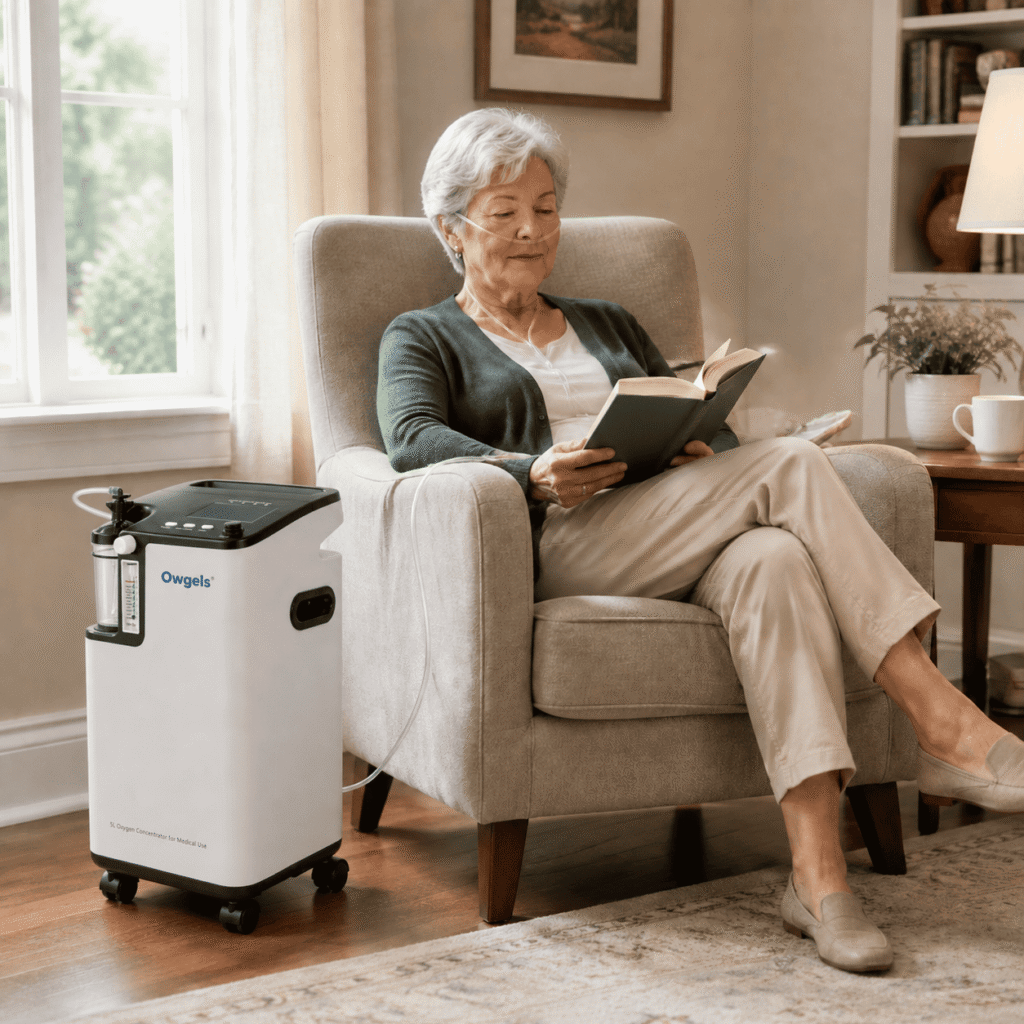
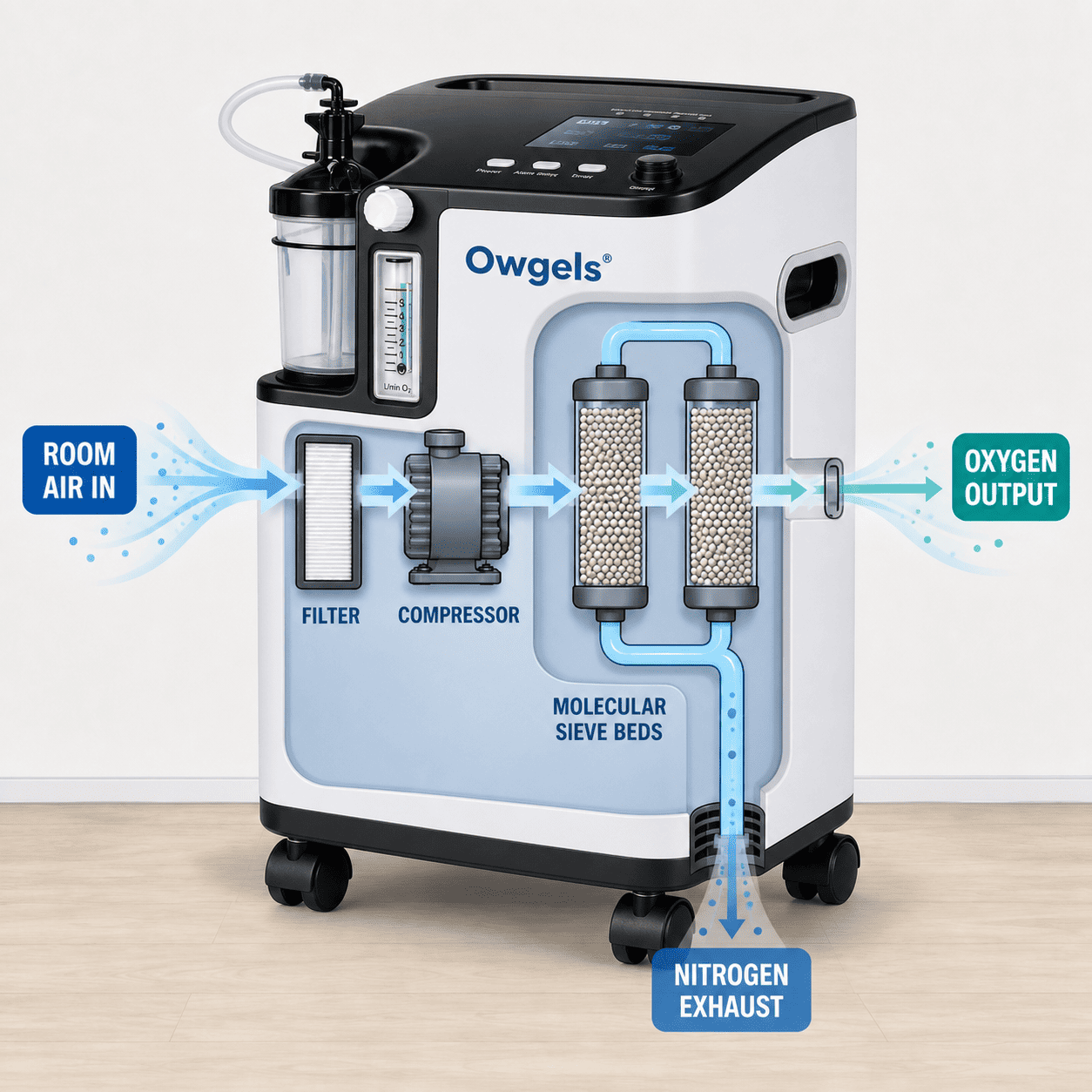
An oxygen concentrator is a plug-in medical device that draws in ordinary room air, separates the oxygen from nitrogen and other gases, and delivers a continuous stream of concentrated oxygen to the user1 — without cylinders, without refills, and without interruption. It is designed primarily for home use by people who need supplemental oxygen as part of ongoing care.
That answer is simpler than most distribution partners expect. And that simplicity is exactly why the product category is worth understanding carefully before you write it off as too clinical or too niche. The real questions — who uses it, how it compares to alternatives, and what makes a good one — deserve a proper walkthrough.
How Does an Oxygen Concentrator Actually Work?
The short explanation is enough for most distribution conversations — and it is more reassuring than most distributors expect.
An oxygen concentrator draws in room air, filters it through a series of internal components that remove nitrogen and other trace gases, and outputs oxygen at a concentration typically between 90% and 96%2. It does this continuously, as long as it is plugged in. No gas cylinders. No scheduled deliveries. No running out mid-night.
I want to be direct about something I hear consistently in pre-sales conversahttps://owgelsinc.com/wp-content/uploads/2026/08/diagram-of-oxygen-concentrator-air-to-oxygen-process.pngtions: distributors often want to understand the internal mechanism before they feel comfortable selling. I understand that instinct. But the technology inside the device is not what your buyers — or your end customers — need to evaluate. What matters is what it delivers, consistently, over time.
What the Device Actually Produces
The output of a concentrator is not pure oxygen. It is concentrated oxygen — and that distinction matters commercially, because it shapes realistic expectations for distributors, their downstream partners, and end users.
- Typical output concentration: 90–96% oxygen by volume
- Delivery: Continuous flow or pulse dose, depending on the model
- Power requirement: Standard AC power (models vary; portable units may also run on DC or battery)
- Maintenance: Filter cleaning, periodic servicing — no consumable gas supply needed
Why "Black-Box" Is Fine for Distribution Partners
In 15+ years of manufacturing conversations, I have rarely met a distributor who needed to understand the separation process to position the product correctly. What they need to understand is the value proposition: reliable, ongoing oxygen delivery without supply chain dependency.
That is the message that resonates. That is the message that sells.
If a prospect asks how the machine works on the inside, a confident, simple answer outperforms a technical lecture every time. The device processes air and outputs oxygen. It does this automatically. It runs continuously. That is enough.
How Does an Oxygen Concentrator Compare to an Oxygen Cylinder?
This is the comparison that comes up in almost every early distributor conversation — and it is genuinely the most useful teaching moment in the category.
The concentrator and the cylinder are not competing products so much as they are complementary tools with different strengths. Understanding where each one fits helps a distribution partner position the concentrator correctly, without overselling or underselling.
An oxygen cylinder stores pre-compressed oxygen gas and delivers it at high concentration — but it runs out.3 An oxygen concentrator generates oxygen continuously from ambient air and never runs out as long as it has power, but it delivers a lower peak concentration. Neither product is universally superior. The right choice depends on the care setting, duration of use, and the clinical needs of the end user.4

This framing matters because distributors who do not understand it will either position concentrators incorrectly or lose deals they should win.
Breaking Down the Real Trade-offs
| Factor | Oxygen Concentrator | Oxygen Cylinder |
|---|---|---|
| Oxygen concentration | 90–96% (sustained) | Up to 99%+ (while supply lasts) |
| Supply duration | Unlimited (while powered) | Fixed — requires refill or replacement |
| Resupply dependency | None | Regular scheduled resupply |
| Portability | Home units are stationary; portable units available | Portable, but limited capacity |
| Setup complexity | Plug in and use | Requires gas handling knowledge |
| Best suited for | Chronic home care, ongoing supplemental therapy | Acute care, emergency use, transport |
The Concentration Trap
One of the most common misconceptions I encounter from distribution partners is that higher oxygen concentration automatically means a better product5. This is not accurate for this product category — and believing it leads to the wrong purchasing criteria.
For a home care patient receiving supplemental oxygen for COPD or post-surgical recovery, a device that reliably delivers 93% ±3% continuously throughout the day and night is clinically meaningful. Reaching 99% concentration is not the goal. Sustained, dependable delivery is.
"The question is not whether the device can hit a peak number — it is whether it can maintain therapeutic output over hours of continuous use."
Distributors who frame their evaluation around peak concentration risk sourcing the wrong product for their market, or creating unrealistic expectations for their customers.
When Cylinders Are Still the Right Answer
Honest positioning matters. There are scenarios where concentrators are not the best fit:
- Emergency and acute care — where rapid, high-concentration delivery is required immediately
- Transport and ambulance use — where power dependency is a real constraint
- Short-term post-procedure recovery in clinical settings where a cylinder is already on hand
Acknowledging these limits actually builds trust with distribution partners. It signals that you understand the product — and that you are not just trying to close a sale.
Who Actually Uses an Oxygen Concentrator?
This is where many distributors have the biggest blind spot — and closing it is what typically unlocks their interest in the category.
The assumption is that oxygen concentrators belong in hospitals. The reality is that the primary market is home care — and it is large, growing, and commercially accessible.
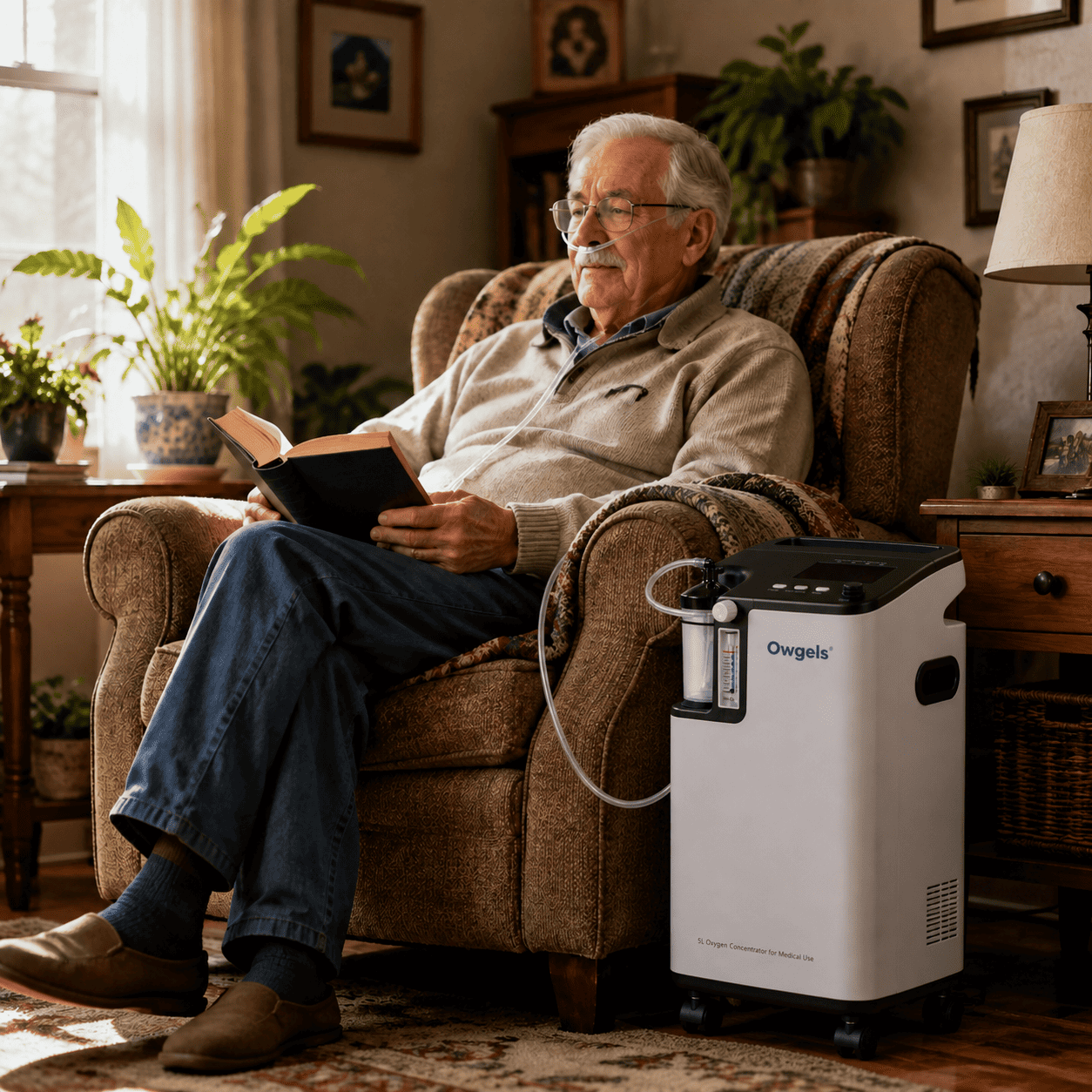
The primary users of oxygen concentrators are people living at home who require supplemental oxygen as part of their daily care. This includes individuals managing chronic respiratory conditions such as COPD, elderly patients receiving home oxygen therapy, and people recovering at home after procedures. The home care setting — not the hospital — is the core market.6
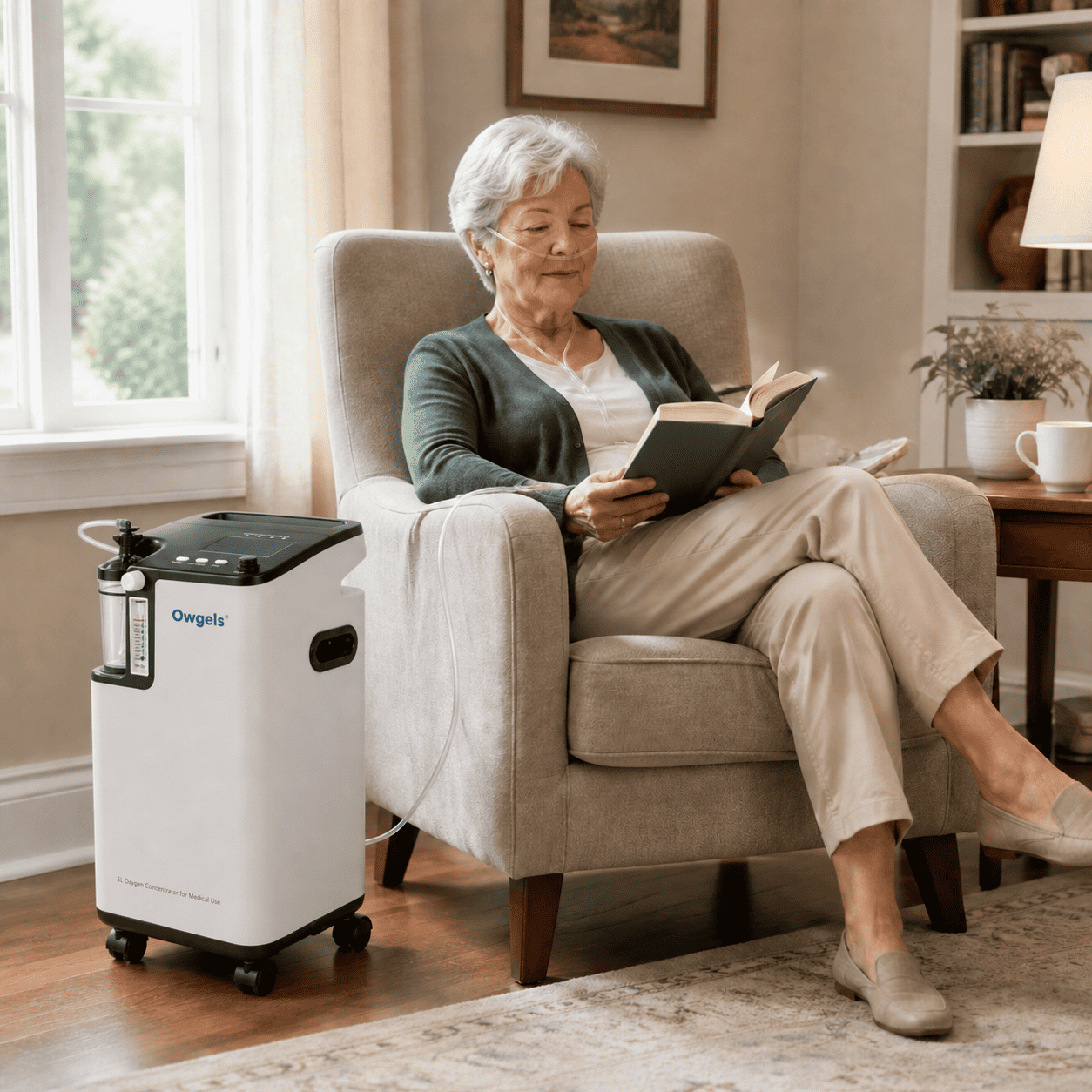
Understanding this shifts the entire commercial conversation. Once a distribution partner sees who the end user actually is, they see the market size — and they see why this product category is worth entering.
The Real End-User Scenarios
When I walk distribution partners through typical use cases, the pattern is consistent. Here are the scenarios that resonate most:
1. COPD home management Chronic obstructive pulmonary disease is one of the most prevalent respiratory conditions globally.7 Many patients require supplemental oxygen at home for extended periods — often years.8 They need a device that is reliable, easy to operate, and does not create a logistics burden for their family or their care provider.
2. Elderly home oxygen therapy Aging populations in many markets are driving sustained demand for home medical devices.9 Older patients with reduced lung capacity benefit from supplemental oxygen without the complexity or risk of managing pressurized gas cylinders at home.
3. Post-surgical and post-hospitalization recovery Patients discharged from hospital following cardiac or pulmonary procedures often require short- to medium-term home oxygen support.10 This segment intersects with homecare agencies, medical equipment rental businesses, and discharge planning programs.
4. Altitude and remote location support In markets where populations live at altitude or in areas with limited medical infrastructure, concentrators provide a meaningful alternative to cylinder supply chains that may be unreliable or expensive11.
Why This Changes the Distributor's Commercial Calculation
When distributors think hospital, they think tenders, lengthy procurement cycles, and clinical evaluation committees. When they think home care, they think recurring customers, ongoing service relationships, and repeat business.
The concentrator's real commercial model is closer to the second. The end user does not buy once. They use the device continuously — and the distribution partner who supports them builds a long-term relationship, not a one-time transaction.
This is the reframe that matters most in early category evaluation conversations.
What Should a Distributor Look for in an Oxygen Concentrator?
Evaluating this product category is not the same as reading a spec sheet. The numbers matter — but so does the context around them.
A concentrator that performs well in a product brochure but fails under real-world conditions — extended use, variable temperatures, user handling — is not a product worth distributing. Here is how to evaluate more systematically.
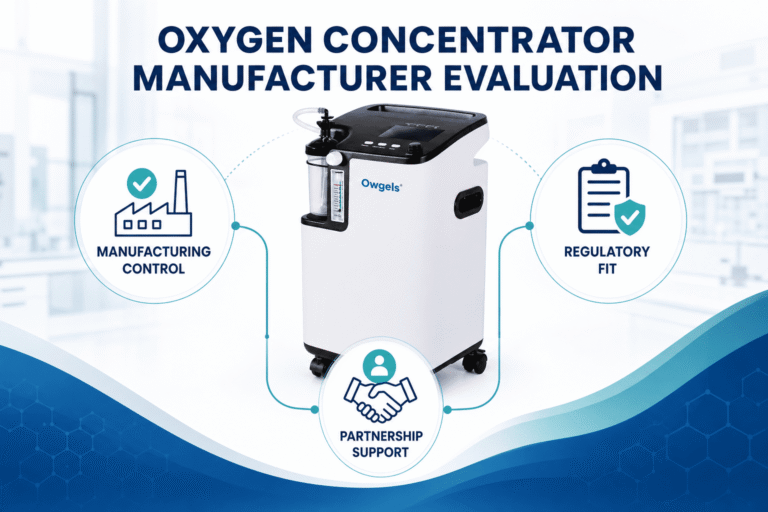
When evaluating an oxygen concentrator for distribution, the key criteria are: consistent oxygen output concentration over time, reliable performance during extended continuous use, regulatory clearance appropriate to your target market, manufacturer quality controls, and after-sales support capability. A single specification rarely tells the full story.
Evaluation Criteria That Matter
Consistency of output, not peak performance The device should maintain its rated oxygen concentration across the full duration of intended use. Ask manufacturers how their products perform after 8, 12, and 24 hours of continuous operation — not just at startup.
Regulatory status For international distribution, regulatory clearance is a baseline requirement, not a differentiator. Owgels maintains FDA clearance and CE certification for applicable products. Buyers should verify the specific certifications relevant to their target market independently and with qualified regulatory counsel. Certification documents should be reviewed directly — not accepted as marketing claims.
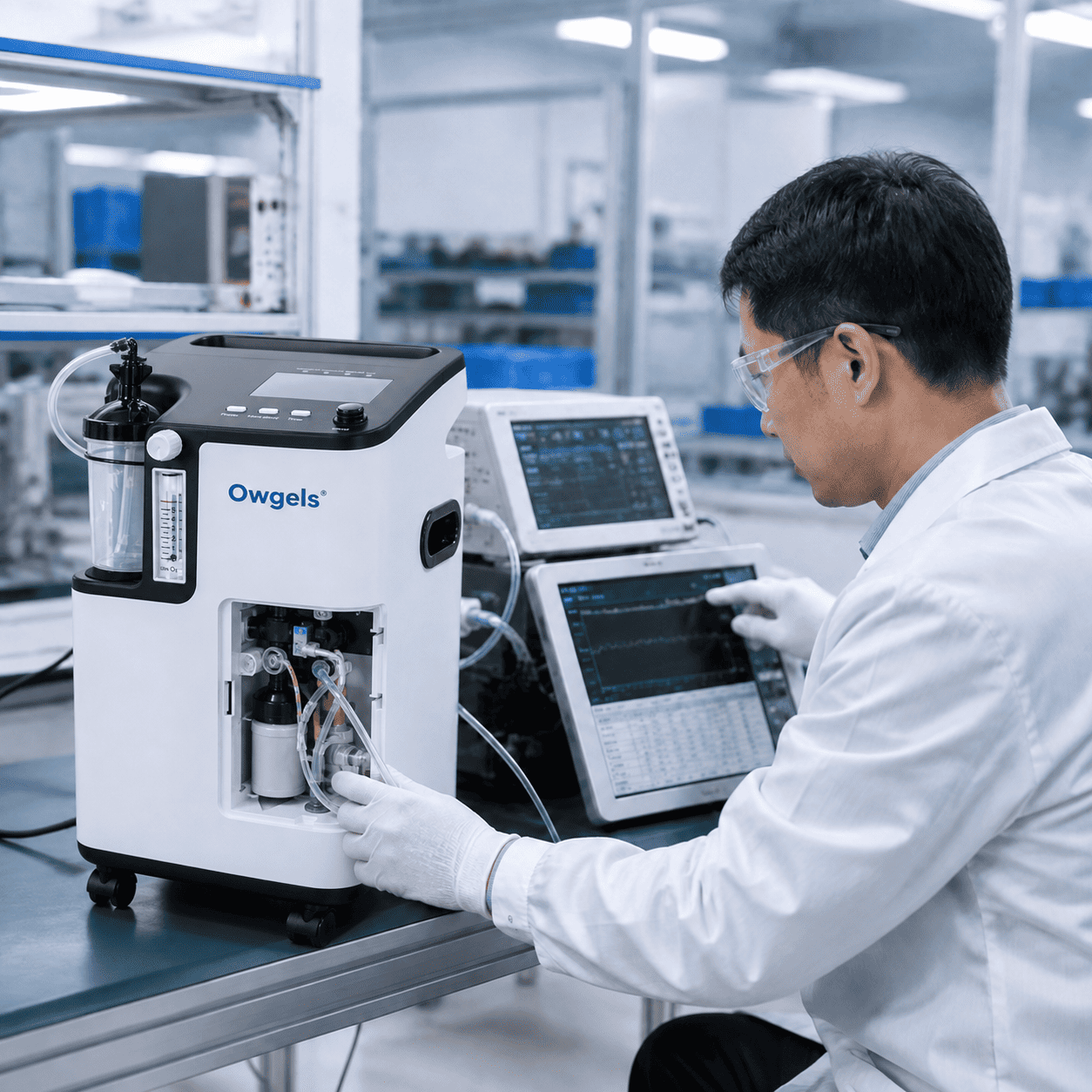
Manufacturer quality controls A supplier's quality management process tells you more than their product brochure. Look for:
- Incoming material inspection protocols
- In-process testing procedures
- Final performance testing before shipment
- Clear documentation of their quality management system
After-sales and technical support Home care devices fail in homes, not in clinics. Your customers will call you, not the manufacturer. Evaluate the support infrastructure before you commit — including spare parts availability, service documentation, and training materials.
OEM/ODM capability If you are building a branded product or need a customized specification for your market, confirm early whether the manufacturer can support this. Not all suppliers offer genuine OEM flexibility.
Red Flags to Watch For
- Manufacturers who quote only peak O₂ concentration without specifying test conditions
- Lack of clear documentation for regulatory certifications
- No defined quality testing process for continuous-use performance
- Vague or absent after-sales support structure
Frequently Asked Questions
Is an oxygen concentrator safe to use at home without medical supervision?
Oxygen concentrators are designed for home use, but they are medical devices. In most markets, their use requires a physician prescription. As a distributor, your role is to ensure end customers are directed to appropriate medical guidance — not to make clinical recommendations yourself. Always verify local regulatory requirements for your market.
What is the difference between continuous flow and pulse dose oxygen concentrators?
Continuous flow devices deliver oxygen at a constant rate regardless of breathing. Pulse dose devices detect inhalation and deliver oxygen only during the inhale cycle. Continuous flow is generally considered more reliable for resting and sleeping patients. Pulse dose is common in portable units because it conserves power and extends battery life. The right choice depends on the patient's condition and activity level.
Can an oxygen concentrator run all day?
Most home oxygen concentrators are engineered for extended continuous operation — typically rated for 24/7 use. This is a core feature of the product category, not an exception. Confirm rated operational hours and ask manufacturers how output concentration holds up over full-day use before you distribute.
How does regulatory clearance affect distribution decisions?
Regulatory clearance — such as FDA clearance in the United States or CE marking in the European Economic Area — is a prerequisite for legal market entry in most regulated markets.12 Buyers should verify that clearances apply to the specific product and market in question. A qualified regulatory professional should be consulted for market-specific guidance. Do not rely on marketing materials alone.
Do oxygen concentrators require a lot of maintenance?
Routine maintenance is straightforward: filter cleaning at regular intervals and periodic professional servicing. The absence of consumable gas supply is a significant operational advantage over cylinders. However, distributors should ensure customers understand the maintenance schedule and have access to service support. A device that fails due to neglected maintenance reflects on the distributor, not just the manufacturer.
Conclusion
An oxygen concentrator does something deceptively simple: it takes in room air and delivers a continuous, concentrated oxygen supply — without cylinders, without refills, and without the logistical complexity of gas supply chains. For distributors evaluating this category, the most important reframe is this: the primary market is not the hospital ward. It is the home.
Understanding what oxygen concentrators do — and who actually uses them — changes the commercial calculation entirely. The category is accessible, the end-user base is large and growing, and the right distribution partner can build lasting customer relationships rather than one-off transactions.
If you are evaluating oxygen concentrators for your portfolio, start with a conversation. At Owgels, we work with distribution partners and medical-device businesses around the world to match the right product solution to the right market opportunity. Contact our team to discuss your market and how we can support your entry into respiratory care.
"Summary - accessdata.fda.gov", https://www.accessdata.fda.gov/cdrh_docs/pdf/K011844.pdf. A regulatory or public-health source defines oxygen concentrators as medical devices that take in ambient air and use internal separation technology to provide oxygen-enriched gas for patient use. Evidence role: definition; source type: government. Supports: The source should define oxygen concentrators as devices that concentrate oxygen from ambient air for medical oxygen delivery.. ↩
"Acute use of oxygen therapy - PMC - NIH", https://pmc.ncbi.nlm.nih.gov/articles/PMC4653960/. Technical guidance on oxygen concentrators commonly describes these devices as producing oxygen-enriched gas in the low- to mid-90 percent range under normal operating conditions. Evidence role: statistic; source type: institution. Supports: The source should document typical oxygen purity or concentration ranges for medical oxygen concentrators.. Scope note: Reported concentration varies by model, flow setting, altitude, maintenance status, and test conditions. ↩
"Oxygen (Compressed Gas) Cylinder Hazard Summary", https://www.patientsafety.va.gov/PATIENTSAFETY/professionals/hazards/oxygen.asp. Medical oxygen guidance describes cylinders as pressurized containers of oxygen that provide a limited stored gas supply and require replacement or refilling after depletion. Evidence role: mechanism; source type: institution. Supports: The source should explain that oxygen cylinders are containers of compressed medical oxygen whose supply is depleted through use.. ↩
"Oxygen devices and delivery systems - PMC - NIH", https://pmc.ncbi.nlm.nih.gov/articles/PMC6876135/. Guidance on oxygen systems treats concentrators and cylinders as oxygen sources with different operational requirements and clinical use cases, indicating that equipment selection depends on patient needs and care setting. Evidence role: expert_consensus; source type: institution. Supports: The source should support that oxygen source selection depends on clinical need, infrastructure, mobility, and duration of therapy.. Scope note: Such guidance supports the contextual comparison but does not evaluate the specific products discussed in the article. ↩
"British Thoracic Society Guideline for oxygen use in adults in healthcare ...", https://pmc.ncbi.nlm.nih.gov/articles/PMC5531304/. Clinical oxygen-therapy guidelines emphasize titrating oxygen delivery to prescribed flow rates or target oxygen saturation ranges, supporting the view that maximum oxygen concentration alone is not the defining measure of therapeutic suitability. Evidence role: expert_consensus; source type: paper. Supports: The source should show that oxygen therapy is prescribed to achieve clinically appropriate oxygenation targets, not simply maximum oxygen concentration.. Scope note: Guidelines address clinical oxygen use rather than distributor purchasing criteria directly. ↩
"Automated Home Oxygen Delivery for Patients with COPD and ... - PMC", https://pmc.ncbi.nlm.nih.gov/articles/PMC7070269/. Government coverage and home oxygen therapy materials identify oxygen concentrators as common equipment for patients receiving oxygen therapy outside the hospital. Evidence role: general_support; source type: government. Supports: The source should show that oxygen concentrators are commonly used as durable medical equipment for home oxygen therapy.. Scope note: Coverage or policy sources support the importance of home use but may not quantify the entire global commercial market. ↩
"Chronic obstructive pulmonary disease (COPD)", https://www.who.int/news-room/fact-sheets/detail/chronic-obstructive-pulmonary-disease-(copd). World Health Organization and global burden estimates identify chronic obstructive pulmonary disease as a major chronic respiratory disease affecting hundreds of millions of people worldwide. Evidence role: statistic; source type: institution. Supports: The source should provide global prevalence or disease-burden data showing COPD as a major chronic respiratory condition.. Scope note: Prevalence estimates vary by data source, diagnostic definition, and year of measurement. ↩
"Home Oxygen Therapy - StatPearls - NCBI Bookshelf - NIH", https://www.ncbi.nlm.nih.gov/books/NBK532994/. Clinical guidelines on home oxygen therapy describe long-term oxygen therapy for chronic hypoxemia, particularly in COPD, as an ongoing treatment that may continue for prolonged periods when eligibility criteria remain present. Evidence role: expert_consensus; source type: paper. Supports: The source should support that long-term oxygen therapy is prescribed for chronic hypoxemia and may be continued over extended periods.. Scope note: The exact duration varies by disease course, reassessment results, and local clinical practice. ↩
"Older Adults' Needs for Home Health Care and the Potential for Human ...", https://pmc.ncbi.nlm.nih.gov/articles/PMC4270052/. International demographic and health-system analyses link population aging with increased need for chronic disease management, long-term care, and home-based health services. Evidence role: general_support; source type: institution. Supports: The source should connect population aging with increased demand for long-term care, home care, or home health technologies.. Scope note: Such sources support the demographic driver but may not isolate oxygen concentrators as a separate device category. ↩
"Oxygen administration for postoperative surgical patients - PMC", https://pmc.ncbi.nlm.nih.gov/articles/PMC7556934/. Studies of post-discharge oxygen use report that selected patients leave hospital with temporary home oxygen prescriptions when hypoxemia persists after acute illness or cardiopulmonary care. Evidence role: case_reference; source type: paper. Supports: The source should document that home oxygen may be prescribed after hospitalization for selected patients with persistent hypoxemia.. Scope note: The evidence is contextual because indications vary by procedure, diagnosis, oxygen saturation criteria, and reassessment practice. ↩
"Closing gaps in the oxygen supply chain in nations with limited resources", https://pmc.ncbi.nlm.nih.gov/articles/PMC11419572/. Global health guidance describes oxygen concentrators as an oxygen source that can reduce dependence on cylinder delivery logistics in settings where refilling and transport are difficult. Evidence role: general_support; source type: institution. Supports: The source should explain that concentrators reduce dependence on recurring cylinder delivery but require electricity and maintenance.. Scope note: The support is conditional because concentrators also depend on reliable power, maintenance, and suitable operating conditions. ↩
"How to Study and Market Your Device | FDA", https://www.fda.gov/medical-devices/device-advice-comprehensive-regulatory-assistance/how-study-and-market-your-device. Official FDA and European Commission materials state that medical devices must satisfy applicable premarket or conformity-assessment requirements before they are legally marketed in their respective jurisdictions. Evidence role: historical_context; source type: government. Supports: The source should document that medical devices must meet applicable regulatory requirements before being placed on the market in the United States or European Economic Area.. Scope note: Specific pathways depend on device classification, intended use, jurisdiction, and transitional regulatory provisions. ↩

Louis Liu
Clinical and respiratory technology specialist at Owgels Medical, committed to advancing oxygen therapy standards and patient adherence.
Recommended For You
Who makes the best oxygen concentrator?
# Who Makes the Best Oxygen Concentrator? Distributors entering the oxygen concentrator market face...
Empowering Respiratory Health Globally
Learn how Owgels manufacturing capabilities and proven oxygen concentrators can support your business portfolio.